
Guides / Business
The off-season playbook for turf companies
The phone gets quiet, the ground gets cold, and the crew has fewer days. The slow months are the one time you can fix the business instead of just running it. Here is what to do with them.
By Josh West, co-founder of TurfEstimator | November 28, 2026 | 7 min read
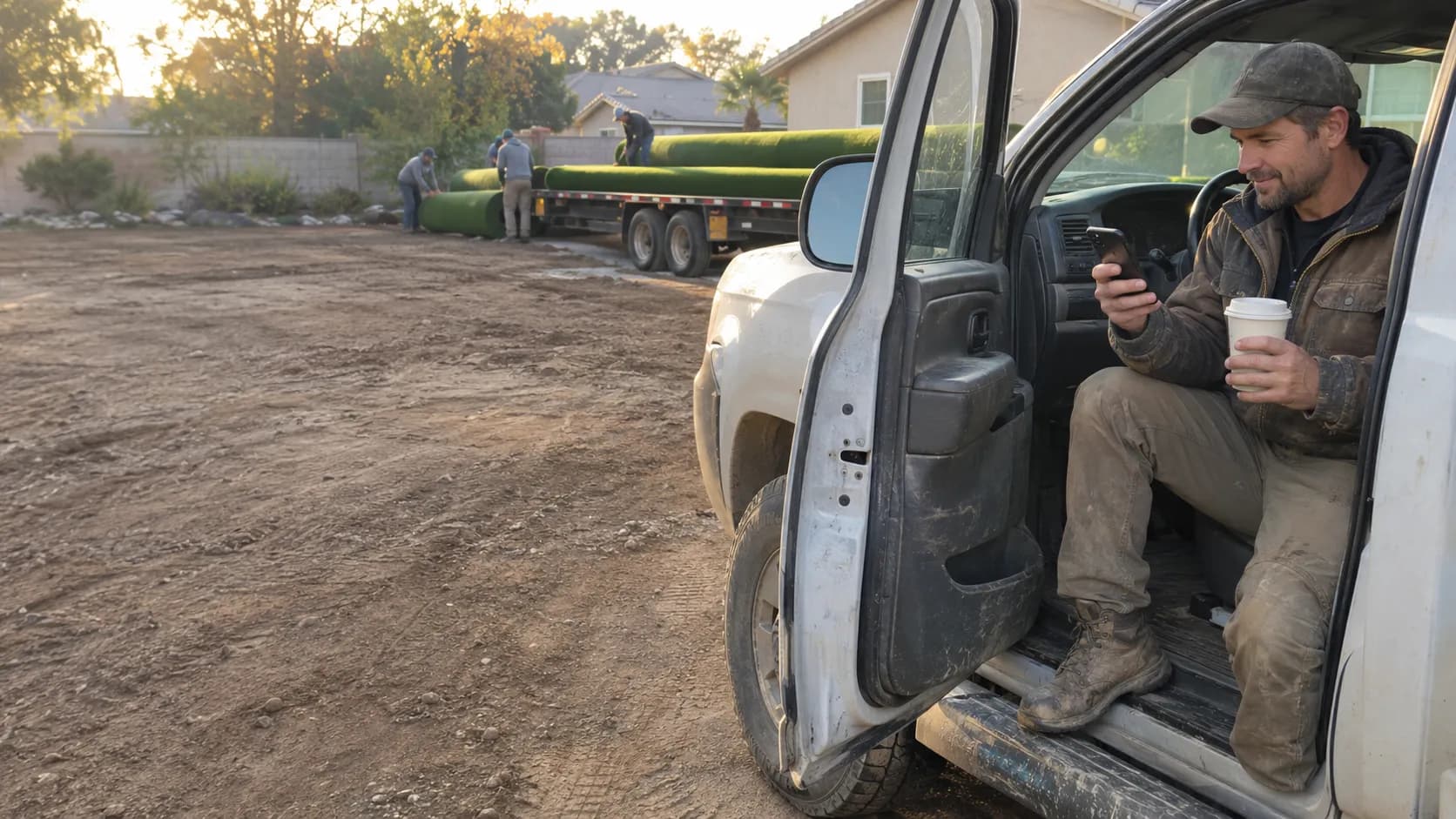
For most turf companies the work slows down from late fall into winter. Up north the ground freezes and installs stop. Down south and out west the work keeps going, but fewer homeowners are thinking about their yard in December. Either way, the phone rings less and the schedule has holes in it.
That is not wasted time. During the season you are too busy to fix your pricing, clean up your leads or train anyone properly. The slow months are when you can. This playbook covers what to do with them, so you start spring with a booked calendar, the right prices and a crew that is ready.
Key takeaways
- Look at your own sales by month, so you know how long your slow season really is and plan around it.
- Go back through last year's open quotes. The homeowners who said "maybe next year" are your warmest spring leads.
- Check which lead sources turned into signed jobs, and move your spring budget toward them.
- Re-price before spring: check last season's real margins and this year's supplier prices.
- Book spring jobs now with a deposit, and use the quiet weeks to train the crew and fix the equipment.
Know your slow season in numbers
Every turf company feels the slowdown, but few know exactly when it starts and ends. Pull up last year's sales by month next to this year's. The low months show up plainly, and so does the spring ramp: when the first jobs started coming in, and how fast the schedule filled.
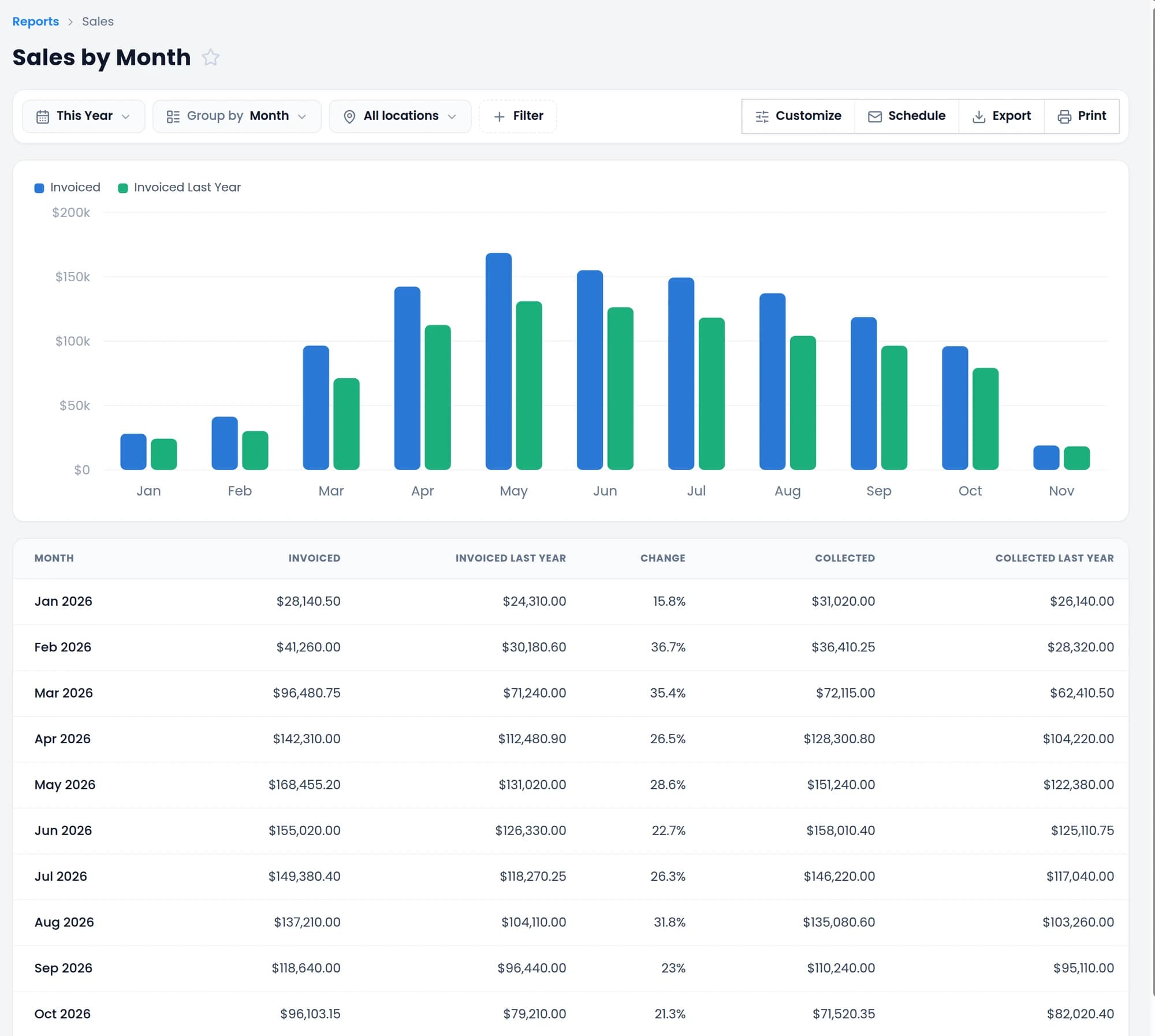
That tells you three things. How many months of overhead you need cash for, when to start spring marketing (a few weeks before the ramp, not after it), and whether this year's slow season is arriving earlier or later than last year's. In TurfEstimator you can schedule a report like this to arrive by email, so you watch the season turn instead of finding out late.
Go back through last year's quotes
Your best spring leads are already in your system: every homeowner who got a price this year and did not sign. They know your company, they have seen your number, and many of them stopped for reasons that have nothing to do with you. The timing was wrong, the budget ran out, or they wanted to wait for the HOA, the pool or the new fence.
Sort the open estimates into three groups:
- Said "next year" or "after the holidays": send a short personal message in January, before the spring rush.
- Went quiet after the estimate: one friendly check-in now, and a second in late winter.
- Lost on price: leave them for now, and come back with an early-booking offer when you open the spring calendar.
Write each message like a person, not a campaign: their name, their yard, what they were looking at. "Hi Dana, you were looking at pet turf for the side yard last spring. We're booking March installs now, want me to hold a date?" A saved template with the details filled in keeps that fast without making it sound canned.
Tip: Take an hour a week through the winter for this list. A few signed jobs from old quotes cost you nothing in ads.
Find out which lead sources paid
Every turf company pays for leads somewhere: ads, a lead service, a home show, a yard sign program. The slow months are the time to see which of them actually turned into signed jobs, not just which ones made the phone ring.
Put each source side by side: how many leads it brought, how many signed, and how much revenue those jobs were. A source that brings a flood of cheap leads and few signed jobs often costs more per job than a quieter source that signs half of what it sends. Cut or shrink the ones that did not pay, and move that money toward the ones that did, before spring, when ad prices and competition both go up.
If you could not answer "where did this customer come from?" for last season, fix that first. Make sure every lead carries its source, including the ones you add by hand, so next winter's review is a report instead of a guess.
Re-price before spring
Prices drift. Your turf supplier raises a price in the fall, base rock costs more, your crew needs a raise, and the price per square foot you set two years ago quietly stops covering it. In season you notice too late, one thin job at a time.
Start with last season's real numbers: pick ten jobs and compare the margin you expected with the margin you got. Then check this year's prices from your suppliers. Here is a made-up example of why it matters:
| Example | Last season | This season |
|---|---|---|
| Turf cost per sqft | $2.10 | $2.30 |
| Turf to order on a 1,000 sqft yard | 1,150 sqft | 1,150 sqft |
| Turf cost for the job | $2,415 | $2,645 |
| Price needed to keep a 40% margin on the turf | $4,025 | $4,408 |
A $0.20 change in turf cost moves the price about $383 on one ordinary backyard, before labor or base. Multiply that by a season of jobs and it is real money. Update your estimate templates and your instant quote pricing before the first spring lead arrives. In TurfEstimator you can test a pricing flow before you publish it, and restore an earlier version if something looks wrong, so changing prices is not a risk to the form homeowners are using.
Clean up your customer list
A messy customer list makes every spring message worse. Clean up the duplicates, close out the leads that are clearly dead, and make sure every customer says what they wanted: pet turf, a putting green, a playground, a front yard.
Tags do most of the sorting for you when they come from the quote form. A homeowner who answered "Pets" gets a pets tag, one who asked about a putting green gets a golf tag, and so on. Then a spring message about pet turf goes only to the people who asked about it.
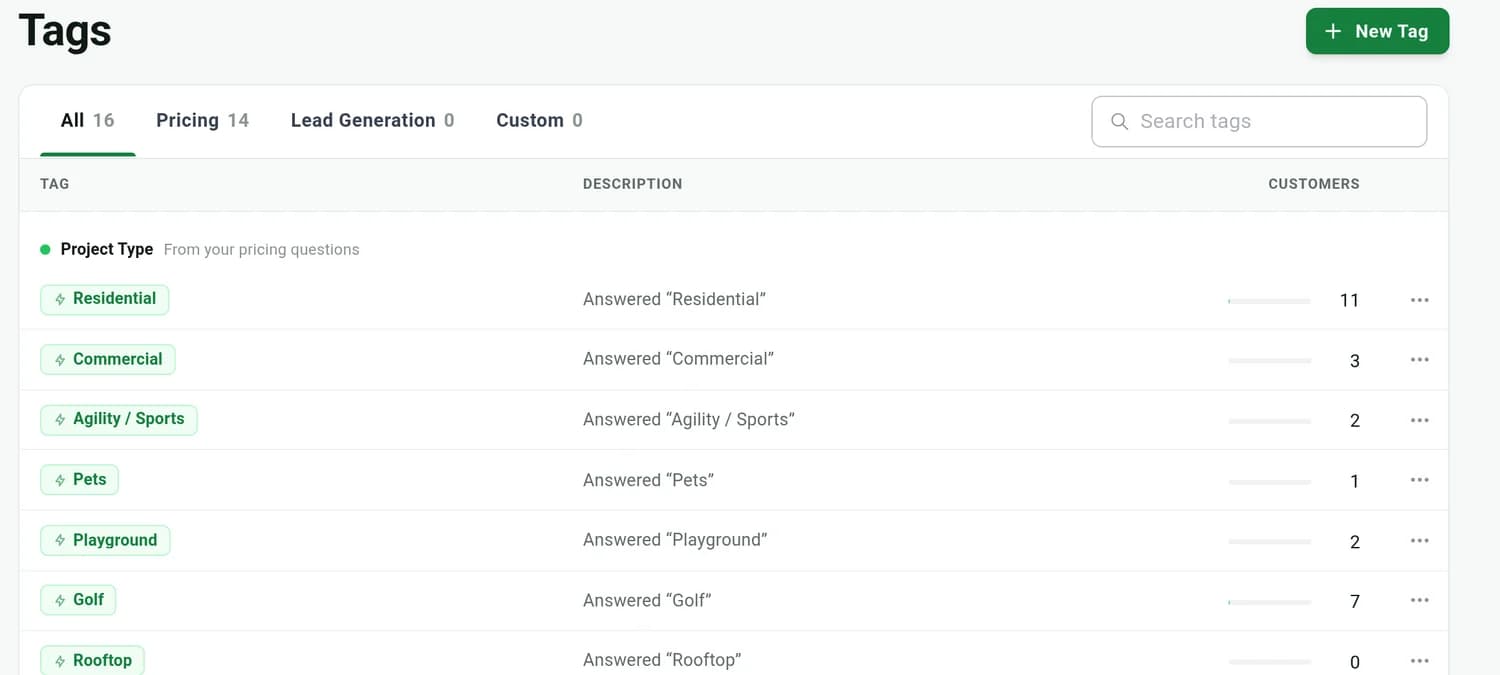
Set your automatic follow-ups up the same way: send them only to customers with a given tag, and only during your send hours, so nobody gets a text at 10 at night or a putting green offer they never asked for.
Book spring jobs now
The companies with a full April are the ones that started booking it in January. Homeowners who plan ahead like knowing their date, and a date with a deposit behind it is a job your competitor cannot take.
- Open your spring calendar early and say so on your website and in your messages.
- Make an early-booking offer worth taking, such as a free upgrade or a small discount for signing by a set date.
- Take a deposit to hold the date, on the estimate or invoice, so the booking is real.
- Let homeowners book their own consultation from your instant quote form, so a lead on a Sunday night becomes a meeting without phone tag.
Keep the offer simple and honest. "Book by February 15, install in March or April, and we will add pet-friendly infill at no charge" is easy to understand. A vague "winter special" is not.
Get the crew and the equipment ready
Good installers are hard to find in March. Keep the ones you have busy enough to stay: equipment repair, shop work, training, the jobs you can still do. Then use the quiet weeks to get ready for the first busy Monday.
- Service the equipment: compactors, power brooms, turf cutters, the skid steer, trailers and trucks.
- Write down how your crew installs, as job checklists, so a new hire learns your way and not the last company's.
- Set up shift templates and positions for the crew schedule, so building a busy week takes minutes.
- Count your stock: leftover rolls, seam tape, infill and nails, and what needs ordering before spring.
- Plan hiring: how many people you need for the spring rush, and start asking now.
A simple month-by-month plan
Adjust it to your region. If your installs only stop for a few weeks, squeeze the same list into less time.
| Month | Do this |
|---|---|
| December | Sales by month and lead sources report; sort last year's open quotes; service the equipment |
| January | Message the "next year" homeowners; re-price; update templates and the quote form; write crew checklists |
| February | Open the spring calendar with an early-booking offer; second check-in on quiet quotes; hire |
| March | Turn spring marketing up; ask last season's customers for reviews and referrals; first installs |
None of this is complicated. It is the work that never gets done in July. Do it in the slow months, and spring starts with a full calendar and prices that pay.
Questions installers ask
What should a turf company do in the winter?
Use the slow months to fix the business: follow up on last year's open quotes, check which lead sources turned into signed jobs, update your prices, clean up your customer list, book spring jobs with a deposit, and service equipment and train the crew.
Can you install artificial turf in winter?
It depends on the ground. Where it freezes, the base cannot be dug and compacted properly, so most installers wait for spring. In milder regions installs keep going through the winter, just with fewer new leads.
When should turf companies start spring marketing?
A few weeks before your spring ramp, not after it. Look at last year's sales by month to see when jobs started picking up, and start booking and advertising ahead of that.
How do I get old turf quotes to sign?
Send a short, personal message that mentions their yard and what they were looking at, at the right time: January for "next year" leads, with an early-booking offer for the ones who stopped on price.
Should turf installers raise prices every year?
Check them every year. Compare the margins you expected on last season's jobs with the ones you got, and update your prices when supplier, base or labor costs have moved.