
Guides / Crews
How to run turf installation crews without losing track of hours
A practical system for turf crews: plan the week by job, send crews out with everything they need, clock in on site, and get clean hours to payroll and job costing.
By Josh West, co-founder of TurfEstimator | October 1, 2026 | 7 min read
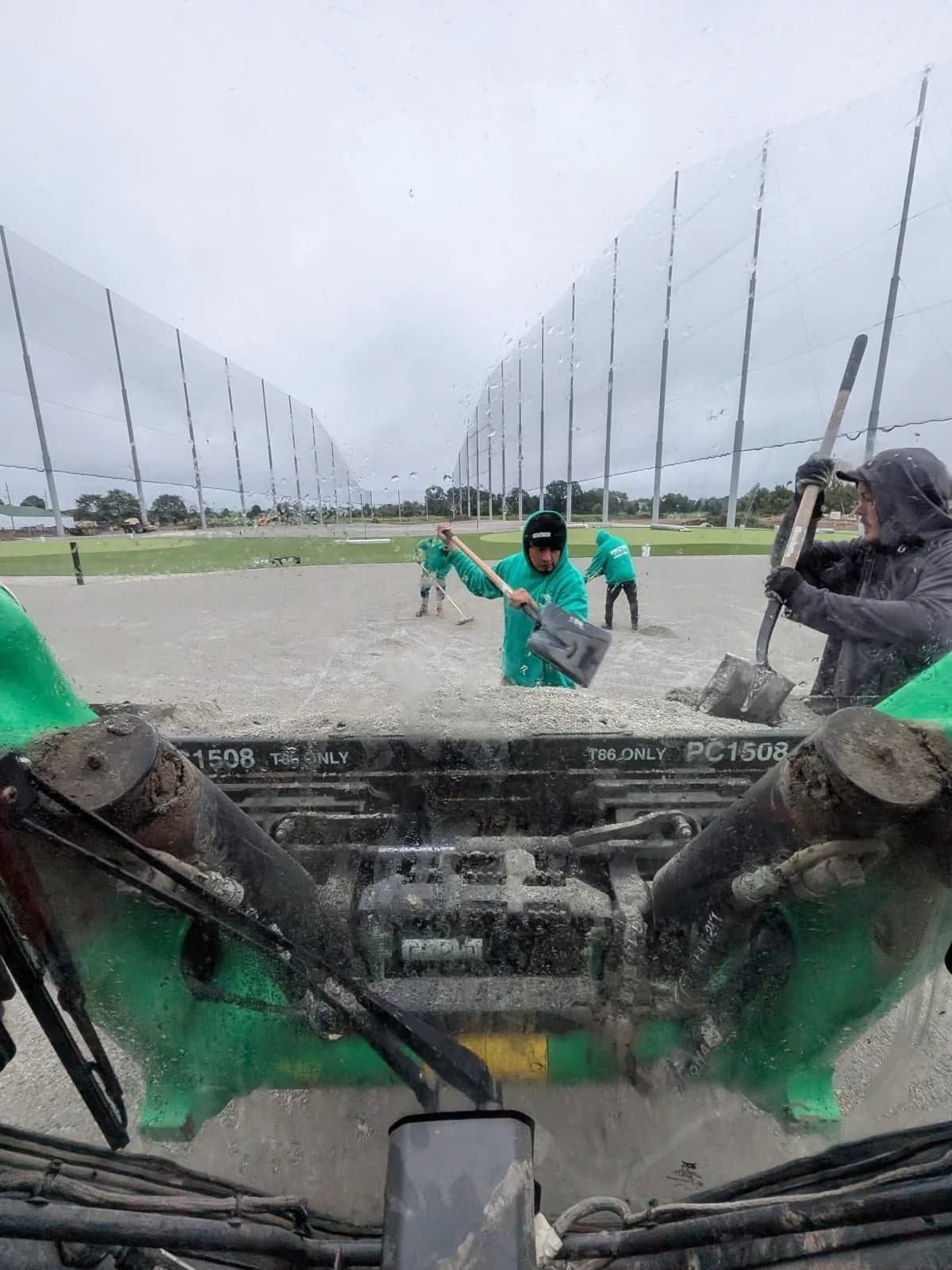
Running turf crews comes down to three things. Every crew knows where it is going and what it is building, every hour lands on the right job, and the homeowner is never surprised. Miss one of those and it shows up as a callback, a payroll argument or a job that made less than you bid.
Here is a system that works for a two-crew shop and still works at six. Use whatever tools you like. The steps are the same.
Key takeaways
- Plan the week by job first, then assign crews, and leave room for weather.
- No crew leaves without the address, layout and cut list, checklist and a materials count.
- Clock in at the job site, not at the gas station, so hours land on the right job.
- Overtime rules differ by state. Check yours before you set up timesheets.
- Compare labor hours to the estimate on every job, while you still remember why it ran over.
Plan the week by job, then by crew
Start with the jobs, not the people. List every job that is signed, has its deposit in and has materials ordered or sitting in the yard. Those are the jobs you can actually schedule. Then give each one a realistic crew size and number of days.
Most residential backyards are a one to three day job for a crew of three or four, depending on demo, base work, access and how many seams there are. Put the whole length of the job on the schedule, not just the start day, so nobody books a second job on top of day two. Say a two-crew week looks like this:
| Crew | Mon | Tue | Wed | Thu |
|---|---|---|---|---|
| Crew A (4) | 1,800 sqft backyard | 1,800 sqft backyard | Putting green | Putting green |
| Crew B (3) | 650 sqft front yard | Dog run | Dog run | Open for weather |
Leave that buffer. One day of rain pushes every job behind it, and a half day open late in the week lets you catch up without calling four homeowners to move their dates.
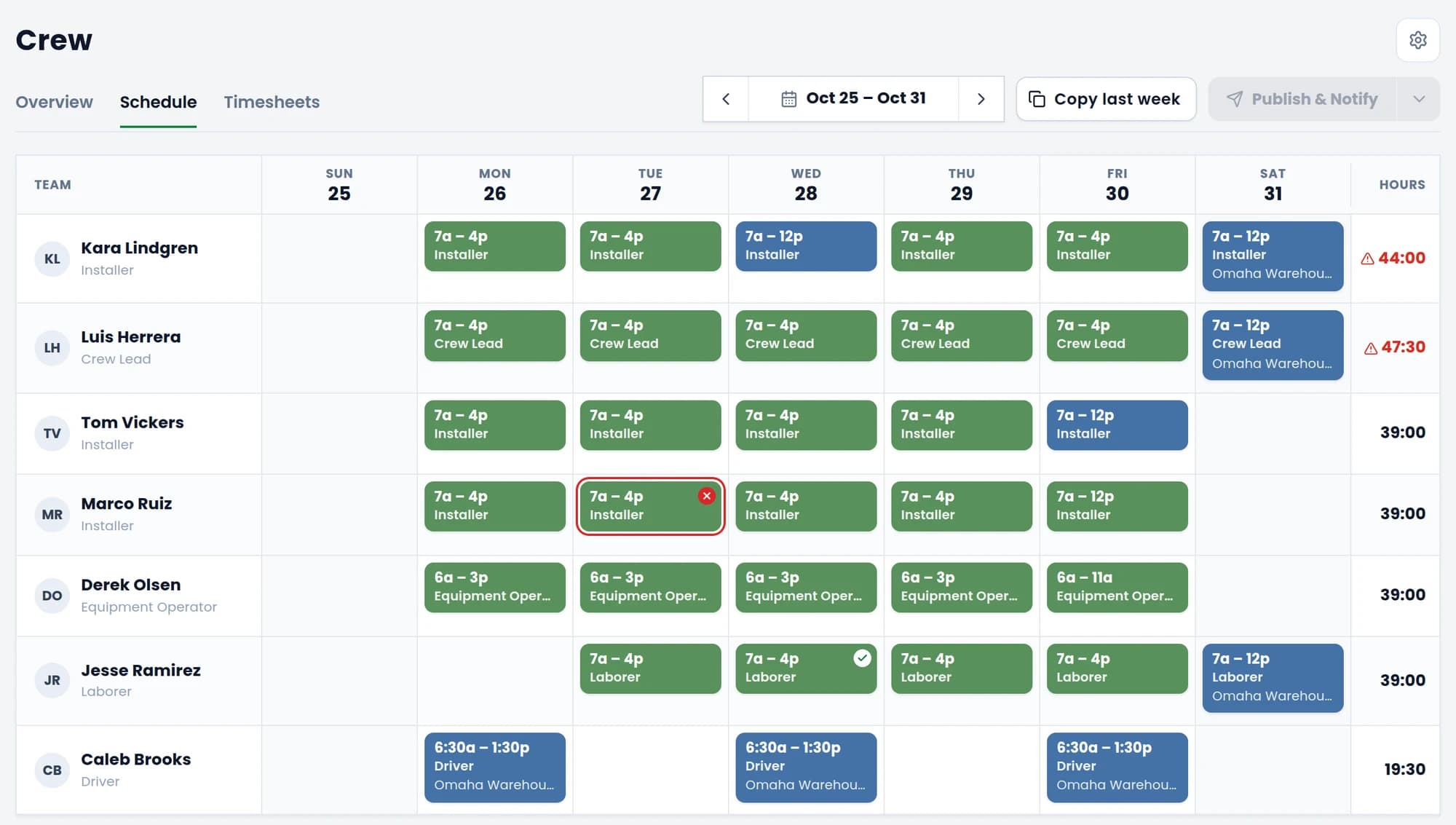
TurfEstimator lays out every crew's week on one schedule, with each job on the days it actually runs, so the office and the leads are looking at the same plan.
What the crew needs before they leave the shop
A lot of lost time on install day happens before the first shovel goes in. The crew drives to the wrong house, waits on a gate code, or opens the roll and cuts it the wrong way. Send every crew out with:
- The address, gate code, parking notes and the homeowner's phone number.
- The roll layout and cut list: which roll, which cut, which direction and where every seam goes.
- A checklist for the job type: demo, base depth, compaction, weed barrier, seams, nails, infill, cleanup.
- A materials count: rolls, seam tape, nails, base, infill, edging or nail board.
- Photos of the yard from the estimate visit, so they know what they are walking into.
Load the trailer against the materials count the night before. A short count on turf or infill means a supply run in the middle of the day with the whole crew standing around on the clock.
Tip: Get utilities marked before demo. In the US, call 811 a few business days ahead so lines are located before anyone digs.
Clock in on site, not in the truck
If you pay drive time, track it, but track it apart from install time. When everyone clocks in and out at the shop, you know what payroll costs and nothing about what each job cost.
A phone time clock with GPS fixes most of this. The crew clocks in when they get to the job, and you can see where each punch happened. Hours land on the job they were worked on, and a punch from the parts store or a driveway three miles away stands out right away.
Set a few rules and stick to them:
- Clock in at the job, after the trailer is parked.
- Clock out for meal breaks the way your state and your policy require.
- Switch jobs on the clock when you move to a second job the same day.
- The lead fixes a missed punch the same day, not on Friday.
Photos before, during and after
Photos protect you more than any contract clause. Take them at three points on every job:
- Before: every side of the yard, sprinkler heads, and any existing damage to fences, siding and pavers.
- During: base depth with a tape measure in the shot, compaction, weed barrier, seams before they are glued, nails along the edge.
- After: wide shots from the patio and the gate, close-ups of seams and edges, the cleaned-up driveway.
The during photos are the ones you will need. A homeowner who calls about a soft spot eight months later is a different conversation when you can show the base depth on the day you built it. Keep photos on the job record, not on a worker's camera roll that leaves when they do.
Timesheets, overtime and payroll
Review timesheets every week before payroll. The lead or the office checks for missed punches, long days and anyone close to overtime, then approves.
Overtime rules are not the same everywhere. Federal law generally requires overtime pay for hourly employees after 40 hours in a workweek. Some states go further with daily overtime after a set number of hours in one day, and California is the best known example. This is not legal advice. Check with your state labor department or your accountant before you set up overtime rules, and again if your crews work across state lines.
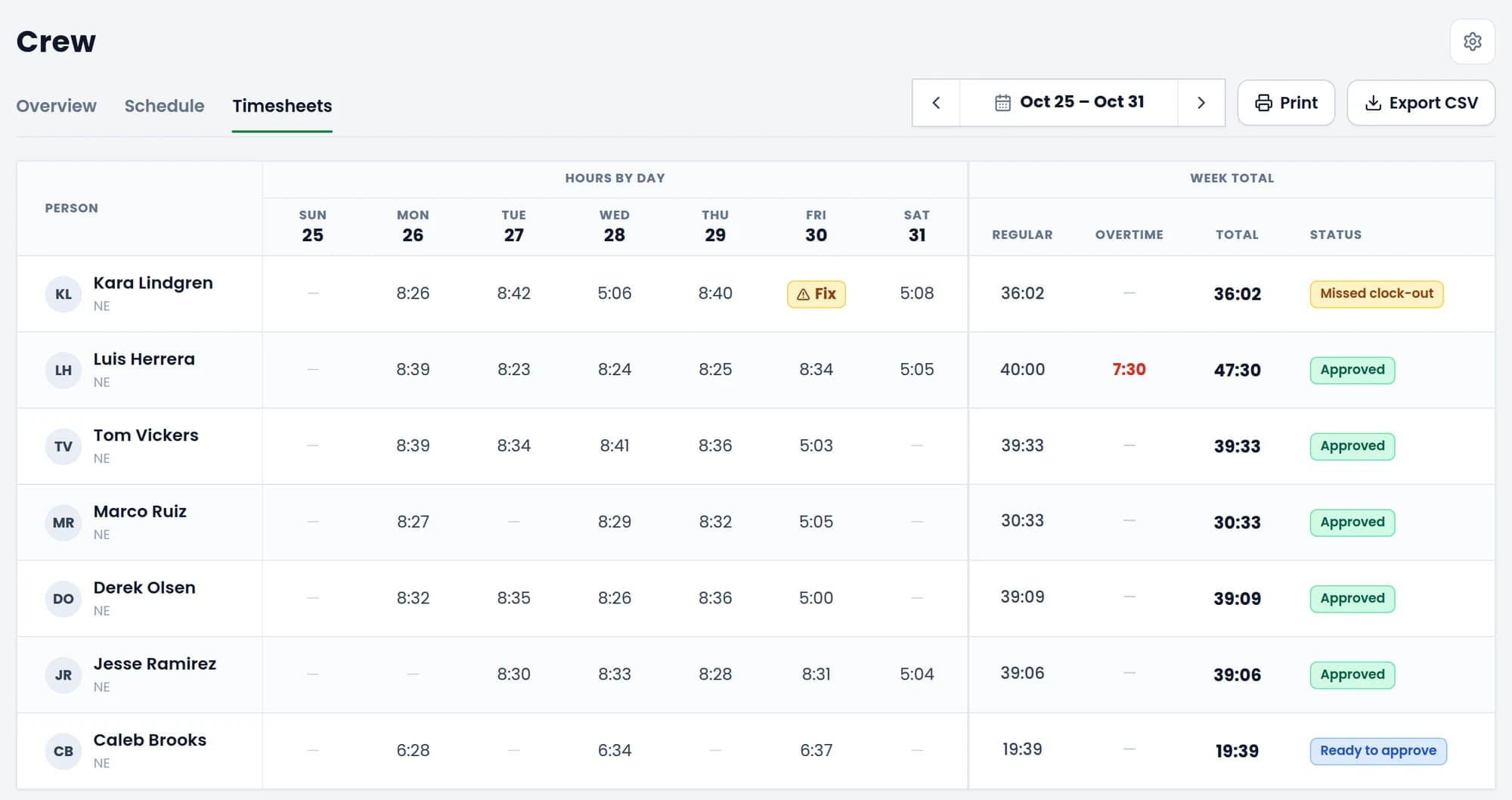
Then get approved hours to payroll without retyping them. TurfEstimator has a GPS time clock, timesheets with approvals and overtime rules by state, and approved timesheets sync to QuickBooks. It does not run payroll or cut paychecks. Your payroll provider still does that, working from clean hours.
Tip: Approve timesheets on the same day every week. When approvals slip, fixes slip too, and a missed punch from nine days ago is a guess.
Job costing on labor
Labor is the cost that moves the most on a turf job. Turf and base are mostly what you ordered. Labor is whatever happened that day. If hours are on the right job, you can hold them up against the estimate while the job is still fresh.
Say you bid a 1,000 sqft backyard at 3 workers for 2 days of 9 hours, with a made-up loaded labor rate of $32 an hour (wage plus payroll taxes and workers comp):
| Line | Hours | Labor cost |
|---|---|---|
| Estimated: 3 workers x 2 days x 9 hours | 54 | $1,728 |
| Actual: day 1 at 9 hours, day 2 at 12 hours | 63 | $2,016 |
| Difference | 9 | $288 over |
That $288 is not a disaster. But if every job runs nine hours over, that is your margin gone. Find out why: rock under the sod, a long wheelbarrow run from the street, a seam that had to be redone. Then fix the bid, not just the crew. Add a line for hard digging or long access the next time you see it on a site visit.
Do this on every job for a month and you will know your real hours per 100 sqft by job type, which beats any rule of thumb.
Talking to the homeowner on install day
Most install day complaints are about communication, not workmanship. A homeowner who knows what is happening rarely calls the office.
- Two days before: text the install dates, how long it will take and what the crew needs: gate unlocked, cars out of the driveway, pets inside, sprinkler heads flagged.
- The night before: confirm the arrival window.
- When the crew heads out: a short text that they are on the way.
- End of day one: what got done and what happens tomorrow. Demo day looks like a mess, so say so.
- At the walkthrough: walk the yard together, show the seams and edges, hand over care instructions and take the after photos.
- A day or two later: send the final invoice and ask for a review.
Send these from a business number, not the lead's personal phone, so the whole thread stays with the company when a worker moves on. TurfEstimator does two-way texting from a business number with email in the same thread, and it can send the review request automatically.
Questions installers ask
How do you schedule turf installation crews?
Schedule by job first. List signed jobs with deposits in and materials ready, give each a crew size and number of days, then assign crews and leave a buffer for weather. Put the full length of each job on the schedule, not just the start day.
What is the best way to track time for turf crews?
A phone time clock with GPS, where workers clock in at the job site. Hours land on the job they were worked on, and you can see where each punch happened. Review and approve timesheets every week before payroll.
How does overtime work for turf crews?
It depends on your state. Federal law generally requires overtime for hourly employees after 40 hours in a workweek, and some states add daily overtime rules. This is not legal advice, so check with your state labor department or accountant.
Does TurfEstimator run payroll?
No. It tracks hours with a GPS time clock, handles timesheet approvals and overtime rules by state, and syncs approved timesheets to QuickBooks. Your payroll provider runs payroll and cuts the checks.
How many workers does a turf install crew need?
Most residential crews run three or four people, with a lead who handles layout and seams. Big jobs, heavy demo and long wheelbarrow runs can call for more. Track hours per job and you will see the right crew size for each job type.